
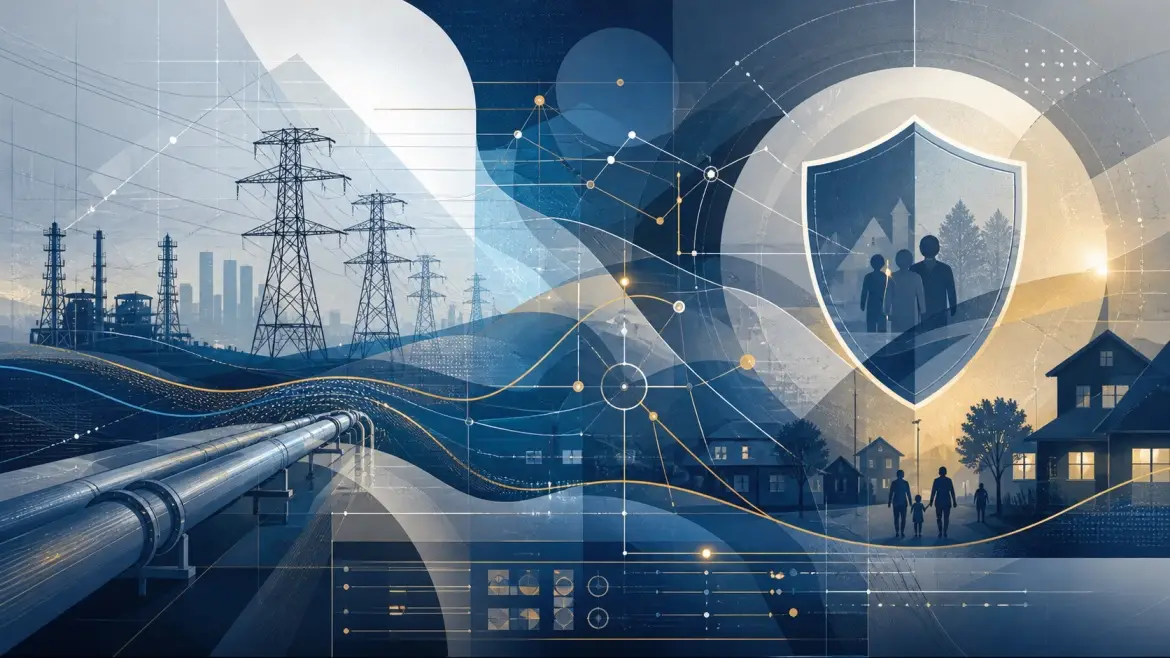
When people think about crime prevention, they often think about neighbourhoods, homes, businesses, or public spaces. Christian Stenner’s ACCPA Conference 2025 conversation expands that view. His focus is crime in the energy sector, and the message is clear: when energy infrastructure is affected, the impact does not stay inside the industry.
It reaches communities.
Energy is part of everyday life. It powers homes, hospitals, schools, emergency services, transportation, communication systems, and local businesses. When energy systems are disrupted through theft, vandalism, cyber activity, trespassing, fraud, or coordinated criminal activity, the consequences can move quickly from operational problems to public safety concerns.
That is why energy-sector crime needs to be understood as more than a corporate security issue. It is a community resilience issue.
Christian Stenner brings a strong background in corporate security, crisis management, and organizational resilience. He has more than 25 years of experience in this field, and his ACCPA keynote focused on crime in the energy sector, societal impacts, and mitigation strategies.
The conversation is important because critical infrastructure is often invisible until something goes wrong. Most people do not think about pipelines, electrical systems, industrial sites, telecommunications, fuel supply, or remote energy assets as part of community safety. But these systems quietly support almost everything a community depends on.
When they are targeted, communities can experience more than financial loss. There can be service disruption, environmental risk, worker safety concerns, emergency response pressure, and loss of public confidence.
A key idea from this discussion is that crime prevention must include preparedness. Organizations need strong security practices, risk awareness, intelligence-sharing, training, and clear response plans. Communities also need to understand how these systems affect daily life and why prevention matters before an incident occurs.
This is where the role of ACCPA becomes meaningful. ACCPA’s work brings together police, municipalities, community organizations, industry, government partners, and safety professionals. That kind of shared table is essential because no single organization can address critical infrastructure risk alone.
Energy-sector crime sits at the intersection of business continuity, public safety, environmental responsibility, and community trust. It requires coordination, education, and practical mitigation.
The broader lesson is simple: safer communities are not built only by responding to crime after it happens. They are built by understanding the systems that keep communities functioning and protecting them before disruption occurs.
Christian Stenner’s message reminds us that crime prevention must evolve with the risks around us. As threats to critical infrastructure become more complex, the response must become more connected, more informed, and more collaborative.
Because when energy systems are protected, communities are protected too.